Ashdown House and the love story of William Craven, 1st Earl of Craven and Elizabeth Stuart, Queen of Bohemia, the Winter Queen

William Craven and Elizabeth Stuart

William Craven and Elizabeth Stuart

There is no evidence which links William and Elizabeth bar circumstantial facts but the circumstantial evidence, as you’ll hear in this story, is very strong.

William Craven came from a poor merchant ancestry but his father built his business up and made a fortune which set William up to be able to change his life entirely. Like Jane Austen’s relative which I blogged about the other week, William was another Dick Whittington style character who became Lord Mayor of London in 1610, but that was no where near his greatest acclaim.

William, 1st Earl of Craven

William, 1st Earl of Craven

William’s family fortune raised him up in the world at a time the Royals needed money. He made his name as a soldier not fighting in England but fighting on the continent for Frederick V, Elector of Palantine, King of Bohemia. Frederick’s fight to keep Bohemia was unsuccessful and so he fled to Holland and the safety of the Hague with his wife and family. It was at some point in this early association with Frederick, William Craven met King Frederick V’s wife, Elizabeth Stuart, sister to King Charles I of England, a renowned beauty of her time and I assume he fell in love. Certainly the first fact we know to prove this, is that he stayed abroad and supported Elizabeth financially when Frederick died in 1632. But William equally invested his fortune in Elizabeth’s brother King Charles I making donations from his vast fortune to aid the Royalists through the Civil War in England. So perhaps he is just a Royalist you may think. William did have his lands in England confiscated when the Royalists lost and King Charles was beheaded.
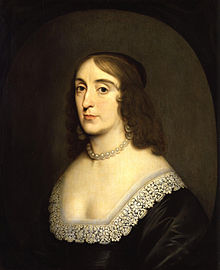
Elizabeth, Queen of Bohemia

Perhaps he was just generous and kind, after all someone must help the Queen of Bohemia and sister of the King of England to survive when she is living in a foreign land in exile with no financial support – and we know William did support her because there are letters in existence of Elizabeth writing to him and pleading poverty, declaring a lack of candles and meat to feed her children. It could be kindness.

Well perhaps what happens when Elizabeth returns to England might convince you a little more than kindness was involved? William Craven returned at the time of the restoration with King Charles II. William is now a close friend and confident of the whole Stuart family, though I am sure his fortune played a part in their return devotion. Feeling vulnerable in his recently restored status King Charles II refused to fund the return and keep of his Aunt Elizabeth, the Winter Queen, afraid of draining the Royal purse with the extravagances of hangers on and getting his head chopped off. So who pays for her return? William Craven of course – that in itself may not be any implication, but what is, is that when Elizabeth returned to England she moved into his home in London and resided there with him.

Some historians believe they married in secret but there is no proof they did. Yet it was exceptional for a woman to live in a man’s house, while he was also living there, unmarried.

The final evidence I have of William’s and Elizabeth’s bond is Ashdown House which still stands on a hill in Wiltshire, high up on the chalk downs near the ancient Ridgeway.
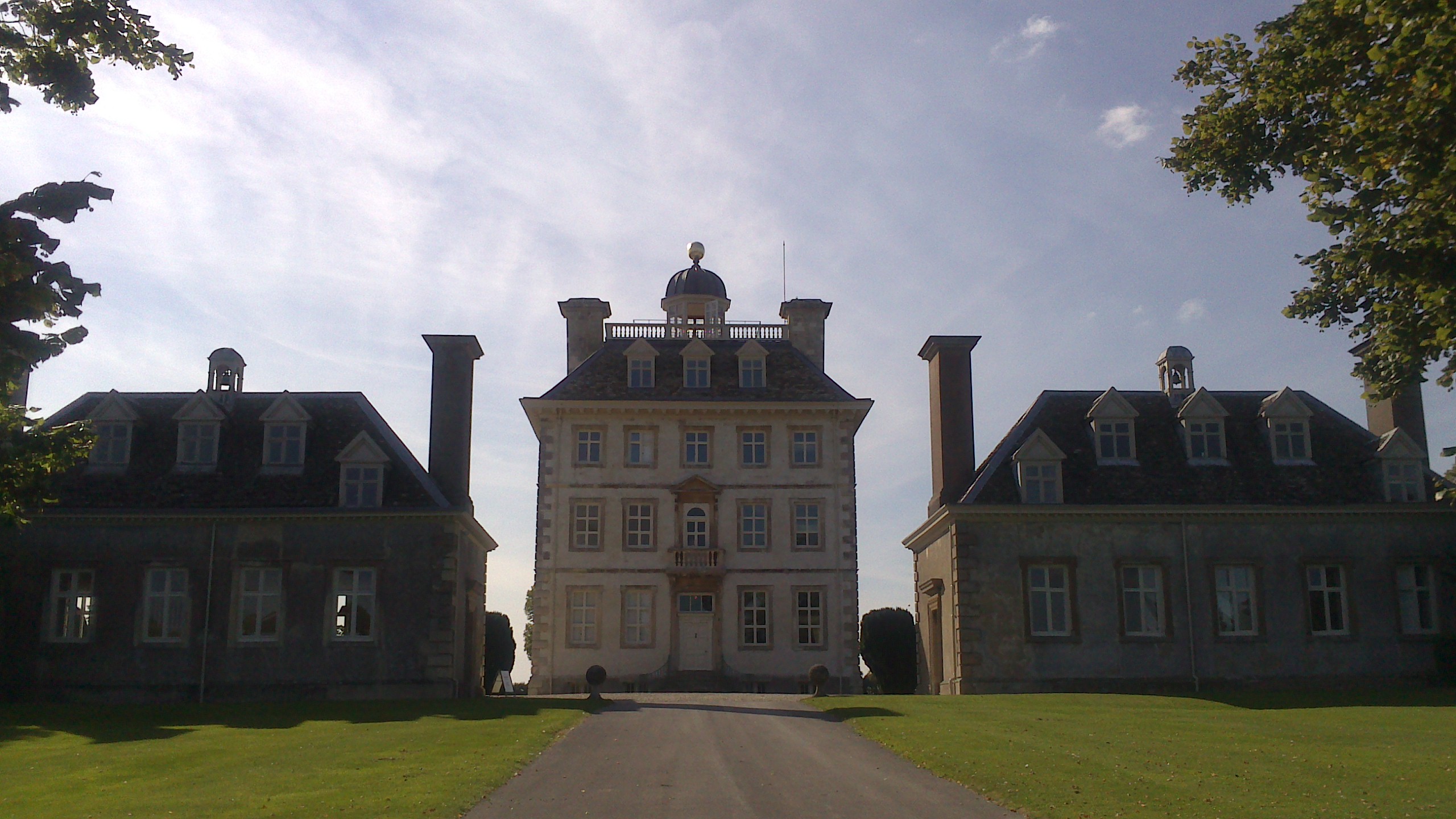
Ashdown House

Ashdown House

Ashdown House is one of two houses William built for Elizabeth, this being the lesser of the two, a hunting lodge for them to ride away to for long weekends, ‘a nest for the lovers perhaps.’ The other house he built for her was a lavish mansion to rival the continental palaces, at Hamstead Marshall, so she might feel like the Queen she was again. Both properties were built in white stone, and designed to catch the female eye with beauty and satisfy Elizabeth’s every whim. Wether there was a love affair or not, William Craven was certainly devoted to Elizabeth. Sadly Elizabeth died before Ashdown was finished and Hamstead Marshall even begun, she never saw either property but she left William her own portrait and the portraits of her children in her will. These now hang at Ashdown House which is open to the public.
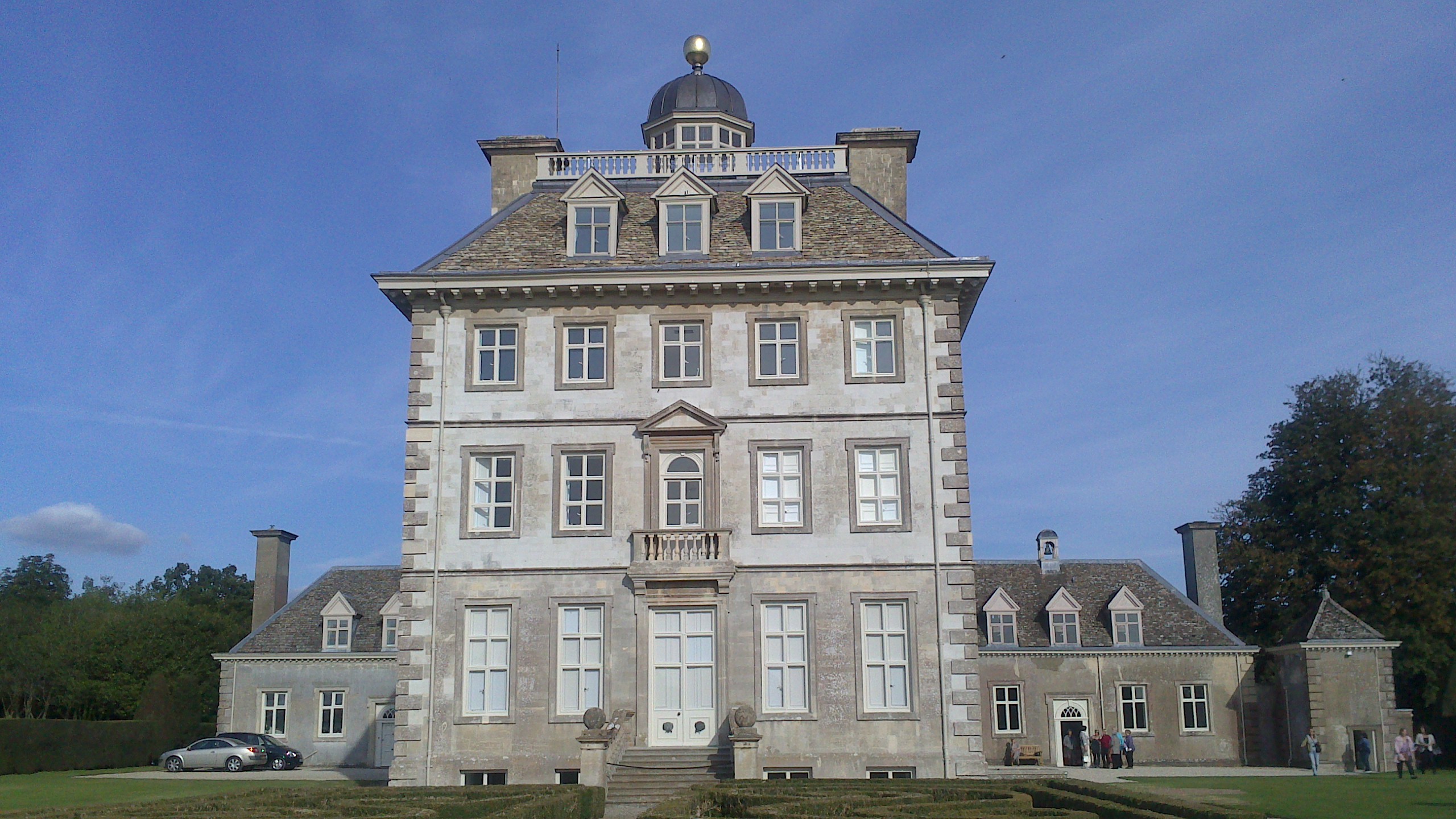
Ashdown House

Ashdown House

Now you might still be sceptical over whether or not there was a physical relationship between them and as I said at the beginning there is no actual evidence they were lovers in a physical sense, but then let’s throw the design of Ashdown into the mix. The whole place is a phallic symbol, and there are many hidden sexual references and innuendo in its design and decoration. Lord Craven was a life loving man. He lived hard and he played hard. He held many formal offices during King Charles II’s reign and we know he played hard with Charles II, who was a frequent visitor at Ashdown once it was built (the wine cellar, which is larger than the footings of the house is testament to the parties they held at Ashdown). Records of the time note William’s bawdy language but also note he remained in London to help manage the burials of plague victims when others deserted the city in fear, and he helped plan how to stop the fire of London in 1666.
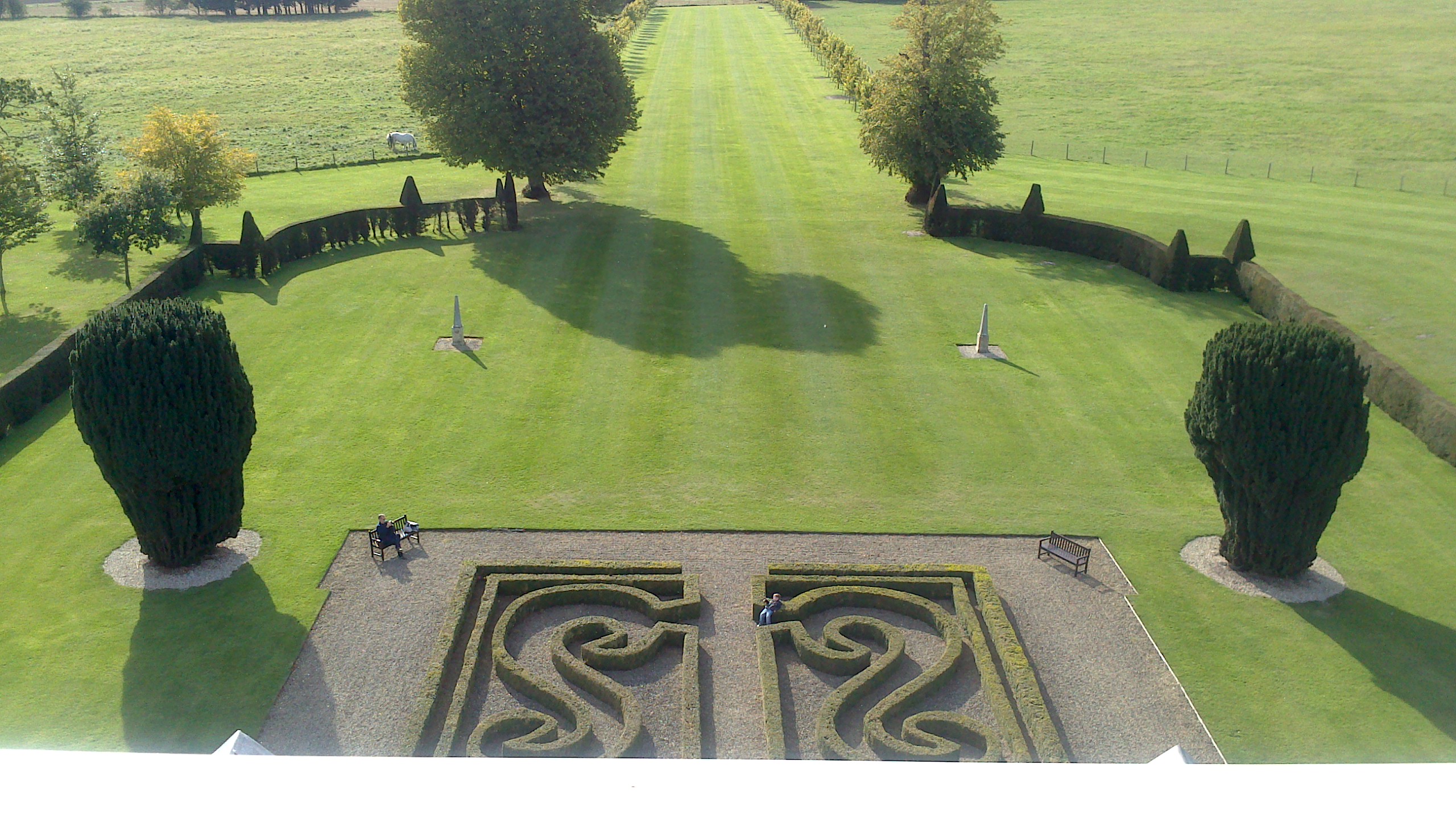
Ashdown House Gardens

Ashdown House Gardens

Now tell me this man, who builds a whole house in the shape of a phallic symbol for a woman he has been devoted to for years, is going to bring her there for long weekends of hunting and not take her to his bed, or get in to hers. Let us also remember the court at the time under King Charles II’s reign. I wrote a blog a little while ago after visiting Hampton Court Palace on the portraits of the Ladies in Waiting there –

https://janelark.wordpress.com/2011/10/25/hampton-court-and-windsor-beauties-ladies-in-waiting-portraits/

It seems to me that in the culture of the time it would be extremely more unlikely Elizabeth and William’s relationship was chaste than it was a full blown affair of the heart and the bedroom. It is just such a shame that Elizabeth was never able to stand on the roof and watch the hunt and see what a perfect little hideaway William had created for them.

I’ll leave you to work out the phallic impressions in Ashdown House yourselves.

Another story next week

The Marlow Intrigues

Discover hours of period drama (2)


The Lost Love of Soldier ~ The Prequel

The Illicit Love of a Courtesan  

The Passionate Love of a Rake

The Scandalous Love of a Duke

The Dangerous Love of a Rogue 

The Secret Love of a Gentleman  

The Reckless Love of an Heir 

The Tainted Love of a Captain 

Jane’s books can be ordered from booksellers in ebook or paperback

Stories of Amore in Eighteenth Century Bath – Miss L—

‘Company at Play’, Thomas Rowlandson, Plate 8 from Comforts of Bath, 1798

This week I am going to tell another true story of the life behind the closed doors of 18th CenturyBath, taken from Oliver Goldsmith’s, The Life of Beau Nash.

The story begins one evening in the Upper Assembly Rooms of Bath, where Beau Nash was in attendance. And although the author does not tell us how, Beau Nash must have had heard some rumour, or known something specific was about to occur. He must therefore have been entangled in all gossip and perhaps played confident too.

But by whatever means he came by the information on the evening in question, he approached a lady of ‘no inconsiderable fortune,’ and her daughter, and ‘bluntly told the mother, she had better be at home:’ It was an ‘audacious piece of impertinence, and the lady turned away piqued and disconcerted. Nash, however, pursued her, and repeated the words again.’

The second warning was observed, as the mother perhaps realised the impertinence had some purpose, ‘and coming to her lodgings, found a coach and six at the door, which a sharper had provided to carry off her eldest daughter.’

The sharper, a Colonel M—- ‘At the conclusion of the treaty of peace at Utrecht,’ ‘was one of the thoughtless, agreeable, gay creatures, that drew the attention of the company at Bath. He danced and talked with great vivacity, and when he gamed among the ladies, he showed, that his attention was employed rather upon their hearts than their fortunes. His own fortune however was a trifle, when compared to the elegance of his expense; and his imprudence at last was so great, that it obliged him to sell an annuity, arising from his commission, to keep up his splendour a little longer.

However, ‘he had the happiness of gaining the affections of Miss L—-, whose father designed her a very large fortune. This lady was courted by a nobleman of distinction, but she refused his addresses, resolved upon gratifying rather her inclinations than her avarice. The intrigue went on successfully between her and the colonel, and they both would certainly have been married, and been undone, had not Mr Nash apprised her father of their intentions.

The old gentleman, recalled his daughter from Bath, and offered Mr Nash a very considerable present,

While ‘In the mean time colonel M— had an intimation how his intrigue came to be discovered; and by taxing Mr Nash, found that his suspicions were not without foundation. A challenge was the immediate consequence, which the king of Bath (Beau Nash), conscious of having only done his duty, thought proper to decline. As none are permitted to wear swords at Bath, the colonel found no opportunity of gratifying his resentment, and waited with impatience to find Mr Nash in town, to require proper satisfaction. 

During this interval, however, he found his creditors became too importunate for him to remain longer at Bath, and his finances and credit being quite exhausted, he took the desperate resolution of going over to the Dutch army in Flanders, where he enlisted himself a volunteer. Here he underwent all the fatigues of a private sentinel, with the additional misery of receiving no pay, and his friends in England gave out, that he was shot at the battle of —.

When the Colonel left England the noble man continued to pursue Miss L—- and ‘pressed his passion with ardour, but during the progress of his amour, the young lady’s father died, and left her heiress to a fortune of fifteen hundred a year.’

She thought herself over the Colonel, after an absence of two years ‘and the assiduity, the merit, and real regard of the gentleman who still continued to solicit her, were almost too powerful for her constancy.’  

But in this period Beau Nash, ‘took every opportunity of enquiring after colonel M—, and found, that’ his rumoured demise was untrue ‘he had for some time been returned to England, but changed his name, in order to avoid the fury of his creditors, and that he was entered into a company of strolling players, who were at that time exhibiting at Peterborough.

Beau Nash must have seen or heard something that twisted his conscience over his actions of two years before, for, ‘He now therefore thought he owed the colonel, in justice, an opportunity of promoting his fortune, as he had once deprived him of an occasion of satisfying his love.

To make amends, Beau invited the lady. Miss L—, along with her adoring noble man, to be a member of a party visiting Peterborough, ‘and offered his own equipage, which was then one of the most elegant in England, to conduct her there. The proposal being accepted, the lady, the nobleman, and Mr Nash, arrived in town just as the players were going to begin. Colonel M—, who used every means of remaining incognito, and who was too proud to make his distresses known to any of his former acquaintance, was now degraded into the character of Tom in the Conscious Lovers. Miss L— was placed in the foremost row of the spectators, her lord on one side, and the impatient Nash on the other, when the unhappy youth appeared in that despicable situation upon the stage. The moment he came on,’ he saw her ‘but his amazement was increased, when he saw her fainting away in the arms of those who sat behind her. He was incapable of proceeding, and scarce knowing what he did, he flew and caught her in his arms.

“Colonel,” cried Nash, when they were in some measure recovered, “you once thought me your enemy, because I endeavoured to prevent you both from ruining each other, you were then wrong, and you have long had my forgiveness If you love well enough now for matrimony, you fairly have my content, and d–n him, say I, that attempts to part you.”

Their nuptials were solemnized soon after, and affluence added a zest to all their future enjoyments. Mr Nash had the thanks of each, and he afterwards spent several agreeable days in that society, which he had contributed to render happy.


Jane Lark is a writer of authentic, passionate and emotional love stories.

See the side bar for details of Jane’s books, and Jane’s website www.janelark.co.uk to learn more about Jane. Or click  ‘like’ on Jane’s Facebook  page to see photo’s and learn historical facts from the Georgian, Regency and Victorian eras, which Jane publishes there. You can also follow Jane on twitter at @janelark